
From finance to art: we plan to open a gallery in Pardubice, says CFIG Arts head Marie Stochlebová
- Date
- Category
- Interviews / Podcasts
A collection of paintings, auctions, bond issues from the art world and a gallery of its own. Activities that reach into culture are becoming ever more numerous in CFIG’s portfolio.
CFIG Arts, a subsidiary of the CFIG investment Group, grew out of its founder Martin Chovanec’s natural interest in the world of art. He gradually began to build his own collection, made up mainly of Czech artists of the 19th and 20th centuries, and as it grew in value, he decided to treat it as a separate investment entity. Since the beginning, its expansion and other activities related to the art world have been looked after by CFIG Arts Director Marie Stochlebová.
Martin Chovanec has spoken in the past about stirring the stagnant waters of the art market, and now his plans are beginning to take clearer shape. His billion-scale Group is managing to keep on growing.
“In the first half of this year we achieved a profit comparable to that for the whole of last year. And that at a time when the war in Ukraine began and the inflationary spiral started turning, which had an impact on some of our activities,”
says Chovanec of his Group’s latest financial results.
Its gross profit before tax reached CZK 87 million for the first half of 2022, compared with CZK 93.6 million for the previous year. As at 30 June, the Group’s assets amounted to CZK 1.477 billion, an increase of 25 per cent on the same period of the previous year. Thanks to the positive results, Chovanec can devote himself to developing further investment activities in the art sector – and closely connected with this is the involvement of Marie Stochlebová.
Already during her studies, the young woman was concerned with connecting the art world with the economic one. She studied Culture Industry at Goldsmiths, University of London, which, in her words, could loosely be translated as the study of the contemporary cultural environment.
“We looked at how the art sector works, how creatives work and how their activity is tied to the economy – it is often an overlooked sector, yet it is essential culturally, in terms of values, and economically too,”
explains Stochlebová.
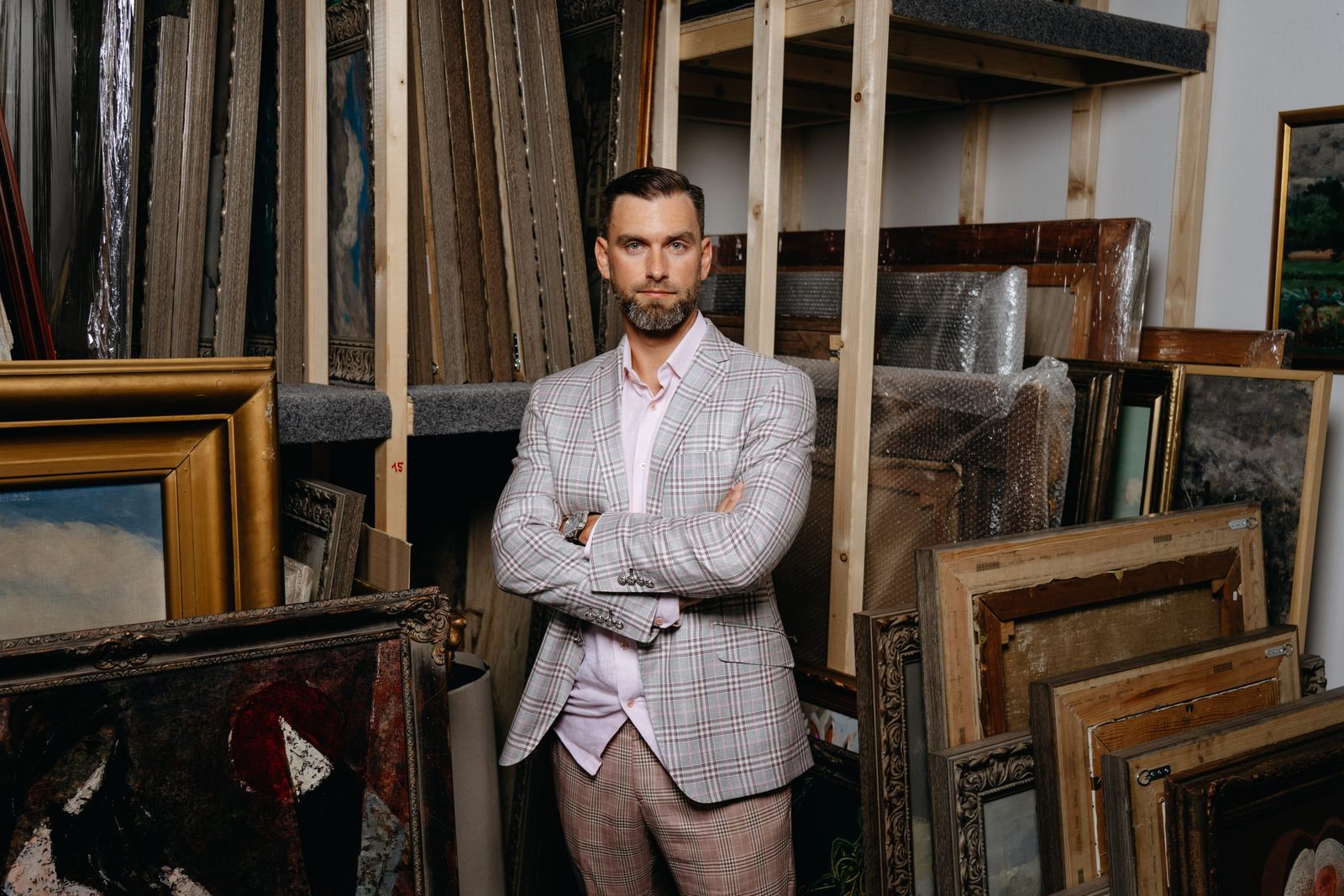
Martin Chovanec, founder of the CFIG Group
After working at the Art Collections Foundation, the Pro Arte investment fund and the Bohemian Heritage Fund, she joined the CFIG Group, because there she was given the opportunity by Martin Chovanec to devote herself purely to fine art, which is the field closest to her heart.
“After years, I was able to focus again on the area I started with at the Art Collections Foundation.”
What makes the CFIG Arts art collection distinctive?
We collect Czech art, which is nothing unusual in the Czech Republic. Czechs like to collect Czechs. Our collection is mainly a cross-section of the 19th and 20th centuries, but we also have some contemporary work – Mr Chovanec diversifies the collection, but the central theme running through it is landscape painting.
Can you name some of the artists you have in the collection?
From the 19th century, we have pupils of Maximilian Joseph Haushofer, for example Adolf Chwala and Michael Haubtmann; from the 20th century, we greatly admire the Mařák school, that is, the landscape painters trained under Professor Julius Mařák at the Academy of Fine Arts in Prague – I would mention, for example, Alois Kalvoda, Josef Ullmann and František Kaván. And among contemporary artists, we have Pasta Oner and Martin Krajc in the collection. In any case, these are works by established artists that have good investment potential.
And which painting in your collection currently has the highest value?
It is a painting by Alois Kalvoda of the Mařák school, called Mládí – Květy a Illuse. Its value is around a million CZK. It is a large format, and the painter was in love at the time – it was a few months before his wedding. Like all of Mařák’s pupils, he was a landscape painter, but this painting stands out within his work because there are two figures in it – him and his bride-to-be. The painting is very optimistic; it radiates happiness and love. When you know the story of its creator, you know that it is something unusual, and it carries an extra emotion.
And what is the value of the whole collection?
The collection is currently worth around 55 million. But we are constantly selling and buying works, so it changes slightly.
How did you actually come to start holding your own auctions as CFIG Arts?
When I joined in 2021, I got to know the collection, and Mr Chovanec and I agreed on our plans and on how we could take the collection further. That we don’t need to have ten similar landscapes by one artist, but can sell some and buy works that are missing from the collection with the proceeds. I looked around the market for an intermediary through whom we could hold auctions, and found that it would be best if we organised them ourselves.
Does it pay off?
Yes, it does. It was helped by the existence of the Livebid platform, which brings auction houses together in one place. You can simply add your auction there, and the same users gather for all the auction houses. So we don’t have to build up clients from scratch – our very first auction was already exposed to an existing audience. With an intermediary we would also have had to pay a large commission. In a classic auction, both the seller and the buyer have to pay it.
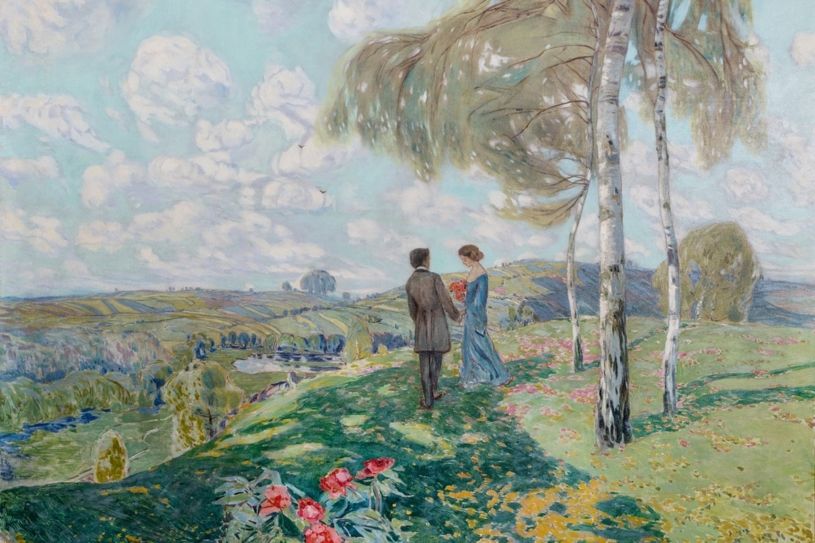
The most valuable painting in the collection is the landscape Mládí – Květy a Illuse
And are auctions doing well online?
Yes, but that revolution only came with the covid pandemic. There was online bidding before covid, but the art market and collectors are very conservative, and it was the pandemic that gave the impulse that showed it can be done. So the art market has now moved online. It is the norm now, and I think people have realised that online auctions are convenient for them. They don’t have to travel to Prague and wait eight hours for their lot; they can bid from anywhere with an internet connection.
Do you auction only works from your own collection in this way?
We give other collectors and the public the opportunity to auction works – that was just the next logical step. And because we offer favourable terms, we don’t charge them an auction premium. Whatever the painting sells for goes to the seller in full. We also arrange photography, transport and general service free of charge.
Perhaps thanks in part to the better accessibility of auctions, more and more people are taking a serious interest in the art world. Do you see this shift too?
Definitely, but I think there are more reasons. During the pandemic, people were shut up at home and realised that they could surround themselves with something that would speak to them – which is exactly what works of art are. People were also generally thirsty for culture, and a painting is something that can bring culture into your home. Another reason is certainly financial. People began to fear for their money, and investing in art is one of the alternative and at the same time safe ways of putting money aside. Crises help this trend a great deal. So the price of art has gone up a lot. Records are being broken: the first painting whose price exceeded CZK 100 million has been sold in the Czech Republic. We will see what happens during the autumn season.
Are your bond issues from the art world also connected with people’s growing interest in art?
Yes, and since CFIG Arts is part of a whole financial group with experience of bond issues, I have a structure of financial analysts at my disposal. And they know their way around this area, so we decided to give it a try. We ourselves were curious whether there would be interest in bond issues of this kind in the art world.
“People began to fear for their money, and investing in art is one of the alternative and at the same time safe ways of putting money aside.”
So what do such bond issues involve?
They are an alternative to buying paintings, because collecting is a demanding activity – you have to take an in-depth interest in art, go to exhibitions, educate yourself. Not everyone has time for these activities. But at the same time, people know that investing in art is advantageous, conservative and long-term, and that art is a good tool against inflation. So they can subscribe for bonds and make their money grow this way. One bond has a value of CZK 25,000, and it is a conservative yield of five per cent. For many, it can also be a first step into the world of art. People often ask me what they should buy to make their money grow, but then they only have, say, CZK 50,000 available. For them in particular, it is an interesting way to put their money aside. We then buy more art for our collection with it and take care of the appreciation ourselves.
As the collection grows, I would say it makes sense to show it to the public. What plans do you have for it?
I would definitely like to hold exhibitions, and I am currently preparing the ground for them. I am trying to approach a regional gallery or to establish cooperation with someone in Pardubice, for example with the public sector too. I am glad that after years I have found myself on the side from which I can help support and cultivate the Czech art scene and, for example, also support meaningful projects financially.
And what about a gallery of your own? Do you have that ambition too?
That is our main goal – in fact, it is the reason I joined CFIG Arts. Mr Chovanec is a great Pardubice patriot and has supported this idea from the start. And as his collection grew, it was clear to him that he did not want to keep it in an office and a depository, but wanted to show it to the public.
So the gallery will, I assume, be right in Pardubice?
Exactly. We have even already chosen a space, but it is awaiting renovation, so it is still a long-distance run. So I don’t want to give away more. But I already know that I would like to put into practice there the things I learned abroad. I don’t want us to create a cold, elitist space, but a meeting place. In London, for example, children can take part in a night at the museum with an educational programme, which is an experience for life. Themed dinners right in the gallery and classical music concerts are also great. I would like to bring our gallery to life and connect it with other cultural disciplines.
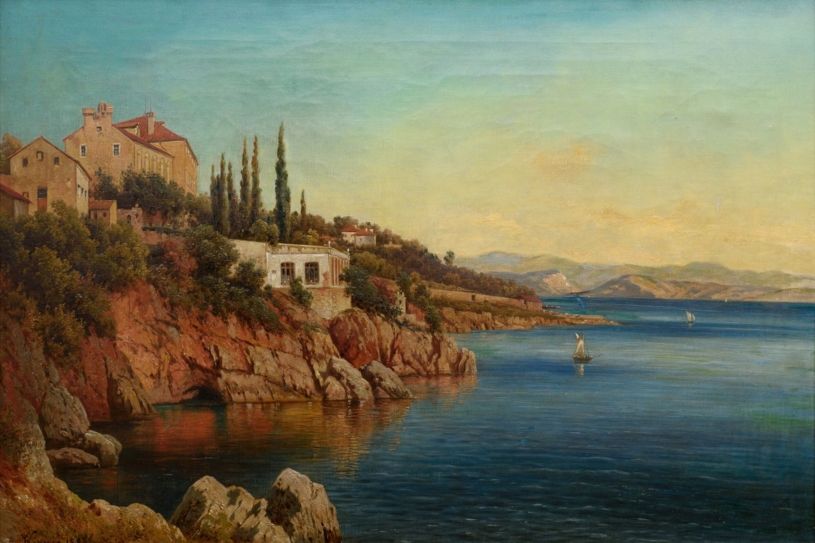
The collection consists mainly of works by Czech artists of the 19th and 20th centuries
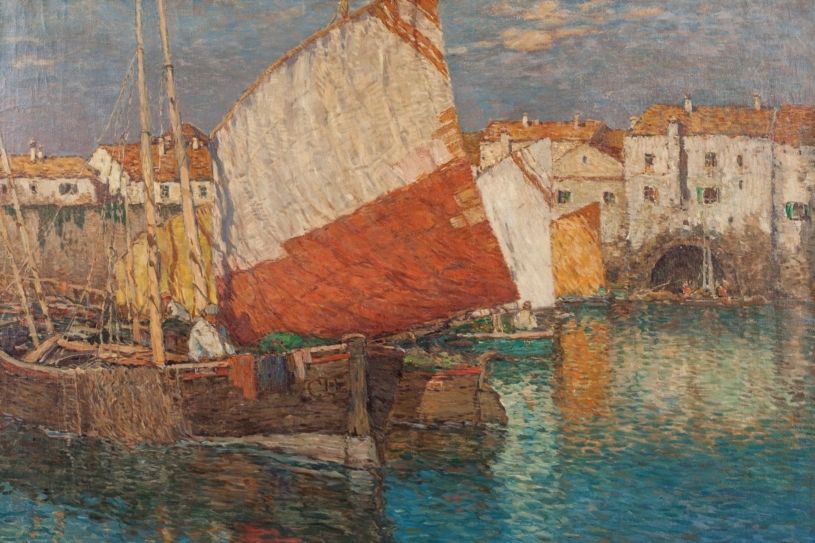
One of the artists represented is Josef Ullmann
Source: CzechCrunch


